
I use the phrase scent as medicine with intention.
And I also believe that when we use the language of medicine, we have a responsibility to explain what we mean.
Are we saying fragrance can treat disease?
That essential oils produce predictable changes in our nervous system?
That certain botanical substances may support well-being?
Or that the experience of engaging with scent can become personally meaningful, comforting, or restorative?
These claims are not equivalent.
And distinguishing them doesn't diminish the extraordinary possibilities of scent. It allows us to explore them with greater integrity.
What is aromatherapy?
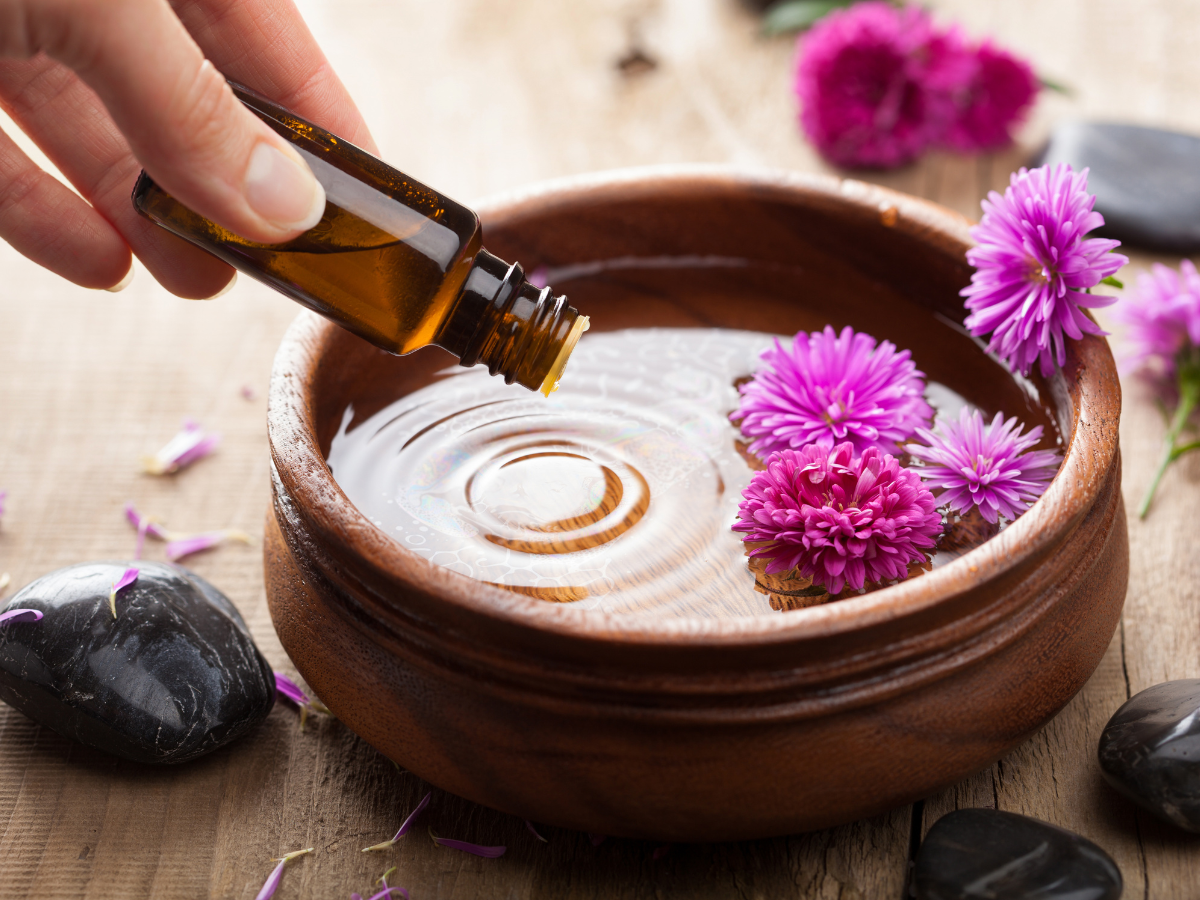
Aromatherapy is commonly defined as the use of essential oils from plants as a complementary health practice.
Essential oils are concentrated aromatic preparations obtained from botanical materials, typically by steam distillation, expression, or other extraction methods.
They are chemically complex products, and their composition depends on the plant species and production process.
Aromatherapy may involve inhaling a fragrance or applying a suitably diluted preparation to the skin.
However, the way an oil is used matters enormously.
Inhalation is not equivalent to topical application.
Topical application is not equivalent to swallowing an oil.
Each involves different exposures, potential effects, and safety considerations.
And a pleasant fragrance isn't automatically a medicinal treatment simply because it comes from a plant.
What does the research say about anxiety and stress?
One useful review was published in 2023 in the journal Complementary Therapies in Clinical Practice. Researchers examined 76 studies involving 6,539 participants, investigating inhalation aromatherapy for stress and anxiety in clinical settings. More than 70% of the reviewed studies reported a positive effect on anxiety in the aromatherapy groups compared with controls.
That sounds encouraging. And it is a legitimate reason for further scientific investigation.
But there are important limitations. The studies used different oils, exposure methods, settings, and outcome assessments. Some did not adequately report doses, botanical species, or safety information.
The authors identified considerable variation and potential bias across the research. As a result, the findings suggest potential benefit; they don't prove that every fragrance or every aromatherapy intervention will reliably reduce anxiety. Nor do they establish a specific biological mechanism for each reported improvement.
What about sleep?
Aromatherapy has also been studied in relation to sleep.
The National Center for Complementary and Integrative Health, part of the U.S. National Institutes of Health, has summarized research suggesting that aromatherapy may improve certain self-reported sleep outcomes. But the agency also emphasizes the need for larger and more rigorous studies.
Why? Because sleep is influenced by numerous factors.
Stress, circadian rhythms, environmental conditions, medical conditions, medications, habits, and expectations can all affect how well we sleep. If someone sleeps better after introducing a bedtime fragrance, the outcome may involve several interacting influences. The fragrance could be part of a pleasant routine. The person may have slowed down before bed. A comforting association may have developed. Or other changes may be contributing.
These are worthwhile possibilities.
Why placebo and expectation matter
The word placebo is often misunderstood.
People sometimes use it to suggest that an experience isn't real. But expectations and context can influence genuine subjective experiences and certain physiological responses.
A person's belief about a treatment can affect how symptoms are perceived.
The attention and care received during an intervention may also contribute.
In fragrance research, blinding is particularly challenging. If participants can smell an essential oil, they may be able to identify whether they're receiving the scented intervention. This makes it difficult to separate the specific effects of an aromatic substance from expectation, preference, and context. That doesn't mean fragrance has no effect. It means rigorous research must account for these influences.
And from the perspective of an intentional ritual, context and personal meaning may be among the very things that make the experience valuable. We simply need to describe them accurately.
A historical perspective: Hatshepsut and the aromatic treasures of Punt
Our interest in aromatic substances did not begin with modern aromatherapy.
More than 3,000 years ago, the Egyptian ruler Hatshepsut commissioned an expedition to the land of Punt, a region associated with the Red Sea and northeastern Africa. The expedition is commemorated in extraordinary reliefs at her mortuary temple at Deir el-Bahri.
Among the valuable materials represented are aromatic goods, including myrrh trees and incense materials. These substances held significance in Egyptian religious and royal life.
Aromatics were associated with temple offerings, fragrant preparations, and other ceremonial uses.
Hatshepsut's expedition tells us something about how highly these materials were valued. Their importance justified difficult journeys and the organization of major trade expeditions.
Scent in ancient Egyptian temple life
Egyptian temple traditions included the preparation and offering of aromatic substances.
Later temples such as Edfu preserve inscriptions relating to aromatic recipes and temple practices. Fragrant materials could be prepared for offerings, sacred images, and ceremonial environments.
A blend known as kyphi appears in ancient Egyptian and later classical sources, although surviving recipes vary. The exact ingredients and methods cannot always be identified with certainty.
What we can say is that fragrance had roles extending beyond personal adornment. It belonged within systems of worship, preparation, and sacred offering.
And that makes its history particularly relevant to modern conversations about ritual. Because aromatic materials have long accompanied experiences of devotion and significance.
Is scent medicine?
My answer is that we need to be clear about which meaning of medicine we're using.
Clinical medicine involves interventions evaluated for effects on health conditions, with attention to evidence, safety, benefits, and risks.
Complementary well-being practices may use fragrance alongside other supportive activities, while recognizing that research on specific benefits may remain incomplete.
Personal and spiritual medicine is a more metaphorical or traditional use of the word, describing something a person experiences as nourishing, meaningful, or supportive.
When I speak about scent as medicine in my work, I am primarily exploring this complementary and personal relationship.
I am interested in scent as a sensory ally. Something that may evoke memory, encourage reflection, accompany a meaningful transition, or become part of an intentional ritual.
Safety is part of honoring the plant
Essential oils are potent, concentrated materials. They can irritate the skin and eyes, trigger allergic reactions, and cause problems when misused.
Some oils require special precautions because of their chemical composition, phototoxicity, or effects on vulnerable populations.
Undiluted essential oils should not routinely be applied directly to skin.
Oral use should never be assumed safe.
Pregnancy, infancy, certain medical conditions, medication use, and the presence of pets may require additional restrictions or individualized professional guidance.
Aromatic smoke and heavily fragranced spaces can also pose respiratory concerns.
A person who prefers a fragrance-free experience deserves that consideration.
Responsible practice means sourcing carefully (which is why I use Emerald Temple), using appropriate dilutions, obtaining consent, observing responses, and knowing when a fragrance is unsuitable.
What about healing?
Healing is a powerful word.
Sometimes people use it to describe improvement from a medical condition. Sometimes it describes emotional processing, reconciliation, meaning-making, or a shift in perspective. Those meanings should not be confused.
A meaningful experience with fragrance may contribute to someone's sense of well-being. That is worth respecting.
We can honor personal testimony without turning it into universal evidence.
We can remain curious about future research.
And we can acknowledge the limitations of what is currently known.
Scent as medicine is most credible when we understand both its possibilities and its boundaries.
For me, that opens the way toward something particularly beautiful.
If we acknowledge what is known about memory, learning, attention, and our sensory systems, how might we intentionally bring fragrance into our lives?
That's what we'll explore next in The art of intentional fragrance.